What is Light Colour Temperature?
When shopping for LED lights, you've probably noticed terms like "warm white," "cool white," or numbers followed by "K" (Kelvin). These refer to colour temperature - one of the most important factors in creating the right atmosphere in your home or business. Understanding colour temperature can help you choose lighting that not only looks great but also enhances the functionality of each space.
The Kelvin Scale Explained
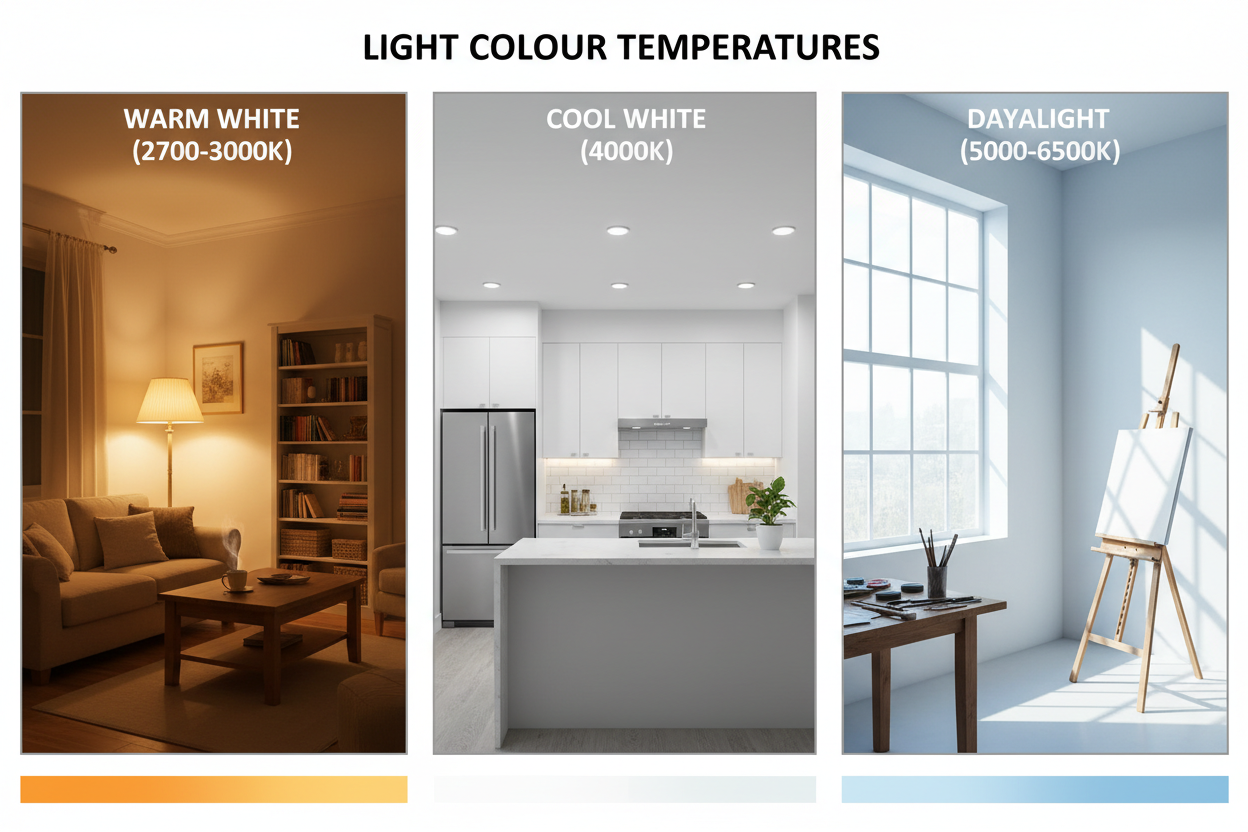
Colour temperature is measured in Kelvin (K), and contrary to what you might expect, lower numbers are "warmer" (more yellow/orange) while higher numbers are "cooler" (more blue/white). Here's how the scale breaks down:

- 2700K - 3000K (Warm White): Soft, yellowish light similar to traditional incandescent bulbs
- 4000K (Cool White): Bright, balanced white light with a crisp appearance
- 5000K - 6500K (Daylight): Very bright, bluish-white light similar to midday sunlight
Warm White (2700K - 3000K)
Characteristics: Creates a cozy, inviting atmosphere with a soft golden glow reminiscent of candlelight or sunset.
Best for:
- Living rooms and lounges
- Bedrooms
- Dining areas
- Restaurants and hospitality venues
- Retail spaces selling warm, comfortable products
Why choose it: Warm white light promotes relaxation and creates an intimate, welcoming environment. It's flattering to skin tones and makes spaces feel more comfortable and homely.
Cool White (4000K)
Characteristics: Provides clean, crisp illumination with a bright white appearance. Offers excellent visibility without the yellow cast of warm white or the blue tint of daylight.
Best for:
- Kitchens
- Bathrooms
- Home offices
- Retail environments
- Commercial spaces
- Hallways and transitional areas
- Task lighting applications
Why choose it: Cool white offers excellent versatility and works well in spaces where you need both functionality and a modern, clean aesthetic. It provides good colour rendering and helps create an alert, productive environment.
Daylight (5000K - 6500K)
Characteristics: Very bright, energizing light with a bluish-white tone that closely mimics natural daylight at midday.
Best for:
- Detailed task lighting and workspaces
- Garages and workshops
- Hospitals and medical facilities
- Display lighting where colour accuracy is critical
- Security and outdoor lighting
- Areas requiring maximum alertness and concentration
- Art studios and design spaces
Why choose it: Daylight temperature promotes maximum alertness and concentration. It's excellent for detailed work and provides the most accurate colour rendering, making it ideal for tasks requiring precision and colour-critical applications.
Mixing Colour Temperatures
While it's generally recommended to keep colour temperatures consistent within a single room, there are situations where mixing can work:
- Layered lighting: Use warm white for ambient lighting and cool white for task lighting in kitchens
- Transitional spaces: Gradually shift from warm in living areas to cool white in work zones
- Accent lighting: Use different temperatures to highlight specific features or create visual interest
Important: Avoid mixing colour temperatures in the same fixture type or visible area, as this can create an unpleasant, disjointed appearance.
Colour Temperature and Circadian Rhythm
Research suggests that colour temperature can affect our natural sleep-wake cycle. Cooler, blue-toned daylight in the morning can help promote alertness, while warmer tones in the evening support relaxation and better sleep. Many modern smart LED systems allow you to adjust colour temperature throughout the day to support your natural rhythms.
Common Mistakes to Avoid
- Too cool for living spaces: Using daylight (5000K+) in bedrooms or living rooms can feel harsh and uninviting
- Too warm for task areas: 2700K in workshops or detailed work areas may not provide enough visual clarity
- Inconsistent temperatures: Mixing different colour temperatures randomly within the same space
- Ignoring existing light: Not considering how natural daylight or other light sources will interact with your chosen temperature
How to Choose the Right Colour Temperature
Consider these questions when selecting colour temperature:
- What activities will take place in this space?
- What mood or atmosphere do you want to create?
- How much natural light does the room receive?
- What are the dominant colours in your décor?
- Do you have any specific visual tasks that require accurate colour rendering?
Testing Before Committing
If you're unsure which colour temperature is right for your space, consider:
- Purchasing sample bulbs in different temperatures to test in your space
- Choosing smart LED bulbs that allow you to adjust colour temperature
- Visiting a lighting showroom to see different temperatures in person
- Consulting with a lighting professional for larger projects
Final Thoughts
Colour temperature is a powerful tool for creating the right ambiance and functionality in any space. While warm white creates comfort and relaxation, cool white offers versatility and clarity, and daylight promotes maximum focus and energy. The key is matching the colour temperature to your space's purpose and your personal preferences.
Ready to find the perfect colour temperature for your space? Explore our range of LED lighting solutions available in various colour temperatures to suit every room in your home or business..