Getting the Right Amount of Lighting for Every Room
Proper lighting can transform a space from dull and uninviting to warm and functional. But how many lights do you actually need in a room? The answer depends on several factors including room size, purpose, ceiling height, and the type of lighting you're using.
Please note: This guide provides general educational information only. For specific lighting requirements for your space, we recommend consulting with a qualified electrician or lighting designer who can assess your individual needs.
Understanding the Basics: Lumens and Room Size
The key to determining how many lights you need starts with understanding lumens – the measure of light output. Different rooms typically require different lighting levels:
- Living rooms and bedrooms: Generally require moderate lighting levels for comfort and relaxation
- Kitchens and bathrooms: Typically need brighter lighting for tasks and safety
- Dining rooms: Often benefit from adjustable lighting to suit different occasions
- Hallways: Usually require lower lighting levels for navigation
Factors That Influence Your Lighting Needs
When planning your lighting, consider these important factors:
- Room size: Larger spaces generally need more light sources
- Ceiling height: Higher ceilings may require more powerful fixtures or additional lights
- Natural light: Rooms with windows may need less artificial lighting during the day
- Wall and floor colours: Darker surfaces absorb more light
- Room purpose: Task-oriented spaces need different lighting than relaxation areas
- Personal preference: Some people prefer brighter or dimmer environments
The Three-Layer Lighting Approach
Professional designers recommend using three types of lighting in every room:
1. Ambient Lighting: Your main source of light, typically from ceiling fixtures or recessed lights. This provides overall illumination.
2. Task Lighting: Focused light for specific activities like reading, cooking, or working. Think desk lamps, under-cabinet lights, or pendant lights over kitchen islands.
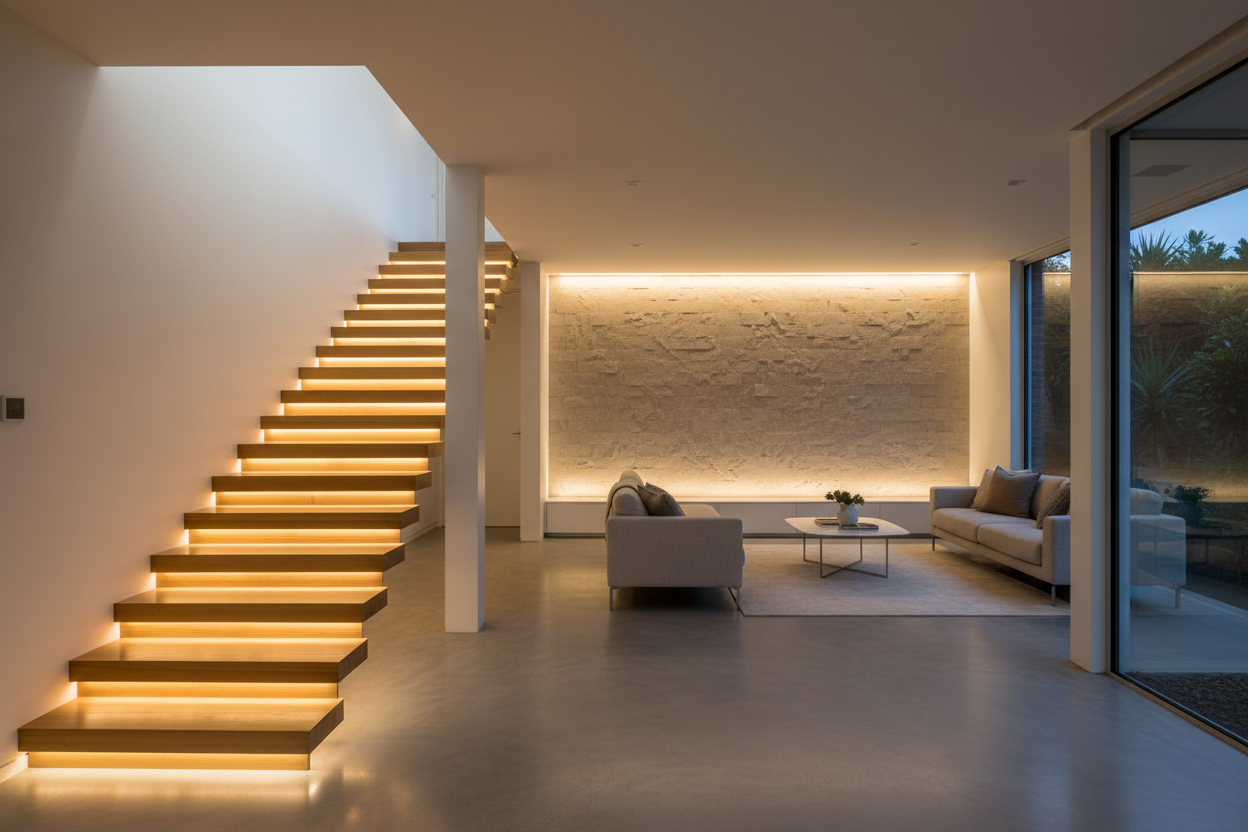
3. Accent Lighting: Decorative lighting that highlights features or creates atmosphere, such as wall sconces or picture lights.
Room-by-Room Considerations
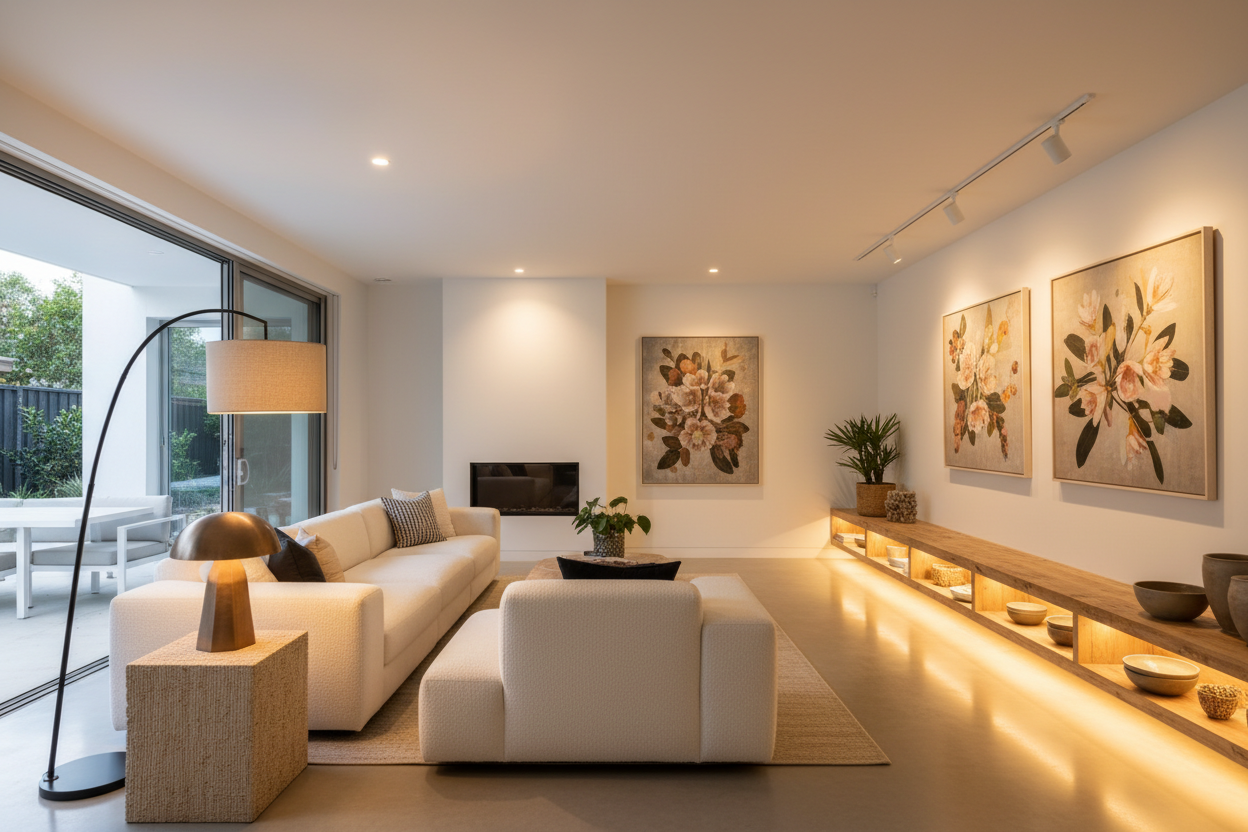
Living Room: Consider combining a central ceiling fixture with table or floor lamps, plus accent lighting for artwork or architectural features. This layered approach provides flexibility.
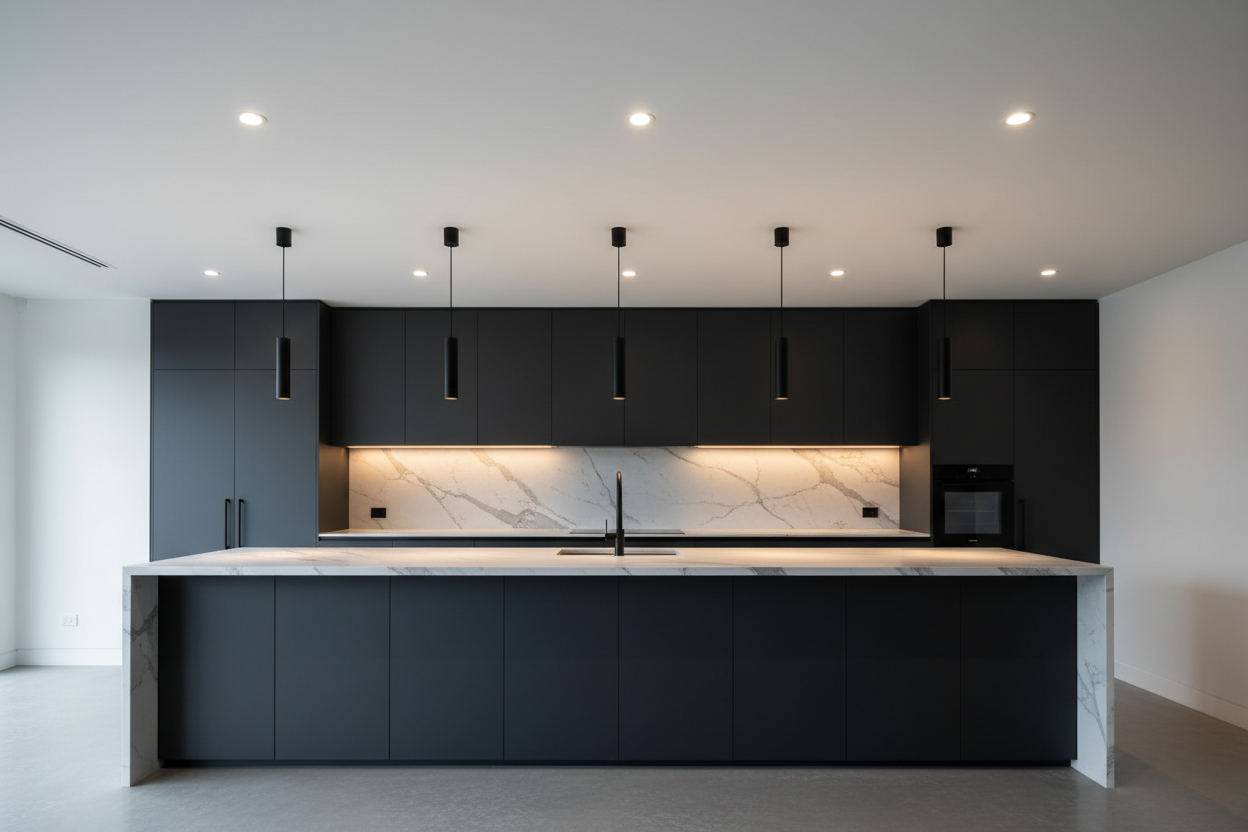
Kitchen: Many homeowners choose recessed lights for general illumination, plus under-cabinet task lighting and pendants over islands or dining areas for both function and style.
Bedroom: A central fixture combined with bedside lamps offers versatility. Dimmable options provide flexibility for different activities and times of day.
Bathroom: Overhead lighting combined with task lighting around mirrors is a popular choice for functionality and safety.
Smart Lighting Considerations
Modern LED technology gives you more flexibility than ever. With smart, dimmable lights, you can adjust brightness levels throughout the day for energy efficiency and ambiance control. This means you can install fixtures and adjust their output to suit your specific needs.
Common Mistakes to Avoid
- Over-lighting: Too many bright lights can create glare and an uncomfortable atmosphere
- Single source lighting: Relying on just one central fixture can create harsh shadows
- Ignoring ceiling height: Higher ceilings may need more powerful lights or additional fixtures
- Inconsistent colour temperature: Mixing warm (2700-3000K) and cool (4000-5000K) lights should be done thoughtfully
Getting Professional Advice
Every space is unique, and lighting requirements can vary significantly based on your specific circumstances. For the best results, we recommend:
- Consulting with a qualified electrician for safe installation and compliance with local regulations
- Working with a lighting designer for complex projects or specific aesthetic goals
- Checking Australian Standards and local building codes for any mandatory requirements
Final Thoughts
There's no one-size-fits-all answer to how many lights you need in a room. By considering your room's size, purpose, and the layered lighting approach, and consulting with professionals when needed, you can create a well-lit, comfortable space. Remember that quality matters as much as quantity – well-placed, high-quality lights often work better than numerous poorly positioned ones.
Ready to explore your lighting options? Browse our range of energy-efficient LED solutions designed for every room in your home. Our team is here to help answer general questions about our products.
Disclaimer: This article is for general informational purposes only and should not be considered professional advice. Lighting requirements vary based on individual circumstances, and we recommend consulting with qualified professionals for your specific project.